
1992 Plymouth Voyager: Recalls, Problems & MPG
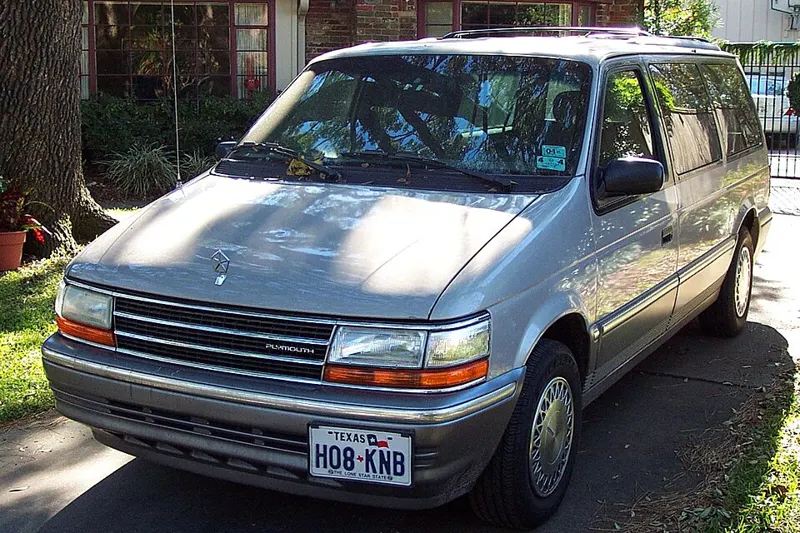
Here are the deets on the 1992 Plymouth Voyager: 9 recalls, 701 owner complaints and up to 20 mpg combined.

Recalls
9 vehicle recalls from the manufacturer, plus 2 equipment/tire recalls that can apply. Repairs are free. Check your VIN to see if one is still open on your car.
Brakes (hydraulic) Vehicle recall #91V170000 · 1991 · 360 vehicles
What's wrong: The brake pedal pad attachment to the pedal arm May not have adequate strength due to mislocation of welds, and could break.
Why it matters: Failure of the pedal pad to pedal arm attachment resultsin loss of braking ability, and could result in an accident.
The fix: Replace inadequate brake pedals with properly manufactured pedals.
Steering Vehicle recall #92V015000 · 1992 · 20,000 vehicles
What's wrong: The zinc plating operation performed on the upper steering column shaft coupling bolt caused hydrogen embrittlement and breakage of the bolt.
Why it matters: Fractures of the upper steering column shaft couplingbolt result in a lack of coupling load on the shaft and loss of steeringcontrol.
The fix: Replace the zinc plated bolt with a phosphate plated bolt.
Fuel system Vehicle recall #92V147000 · 1992 · 3,000 vehicles
What's wrong: Fuel tank flanges were not bent as required to allow the specified clearance for the fuel tank mounting straps and fuel lines at the tank.
Why it matters: The unbent flanges to the fuel tank will damage themounting straps and/or fuel lines. The damaged mounting straps May break causingthe tank to drop and the damaged fuel line will leak fuel. In either case a firecould result if the spilled fuel is exposed to an ignition source.
The fix: Repair the flange by bending to the correct angle; replace damaged fuel lines and mounting straps.
Brakes (hydraulic) Vehicle recall #96V099000 · 1996 · 321,000 vehicles
What's wrong: The ABS hydraulic control unit can experience excessive brake actuator piston seal wear causing pump-motor deterioration.
Why it matters: If this condition occurs, the ABS function could be lost and reduced power assist would be experienced during vehicle braking increasing the potential for a vehicle accident.
The fix: Dealers will test the vehicle's anti-lock brake system and repair the vehicles if necessary. Also the warranty on all ABS components will be extended to 10 years or 100,000 miles (except for the brake actuator piston assembly and the pump-motor assembly which will have a lifetime coverage). Owners…
Steering Vehicle recall #96V229000 · 1996 · 675,000 vehicles
What's wrong: The steering wheel armature stamping can crack and separate from the center hub attachment to the steering column.
Why it matters: If the steering wheel separates from the center hub attachment to the steering column, loss of control can occur increasing the risk of an accident.
The fix: Dealers will inspect the steering wheel for armature cracks in the center hub attachment area. Any steering wheels showing cracks will be replaced. All other vehicles will have a reinforcement plate installed to prevent steering wheel separation in the event cracking occurs.
Body & structure Vehicle recall #97V079000 · 1997 · 436,000 vehicles
What's wrong: The bolts used to attach the strut to the body and the rear liftgate can accumulate fatigue damage if three factors combine. If the bolt is loose, the gas strut is over-pressurized, and the frequency of opening and closing cycles is higher than for the average customer, the bolt can fail.
Why it matters: Personal injury could occur if the bolts break allowing the liftgate to fall suddenly.
The fix: Dealers will inspect for loose fasteners, if the fasteners are loose, the strut (and integral bolts) will be replaced. If the bolt shows evidence of torque, the bolt will be removed, larger washers will replace the existing washer and the bolt will be reinstalled and hand tightened to the target…
Seat belts Vehicle recall #97V148000 · 1997 · 1,100,000 vehicles
What's wrong: Covers on the solid stalk mounted seat belt buckles can become dislodged causing the release button to stick inside the cover. The buckle would then be only partially latched.
Why it matters: In the event of a vehicle crash, the occupant May not be properly restrained increasing the risk of personal injury.
The fix: Dealers will install a cover retaining clip to the stalk mounted buckle cover to prevent dislocation of the buckle cover.
Seat belts Vehicle recall #97V149000 · 1997 · 1,100,000 vehicles
What's wrong: The center rear seat, right outboard side, safety belt anchor hook can become unattached from the body anchor position.
Why it matters: In the event of a vehicle crash, the occupant May not be properly restrained increasing the risk of personal injury.
The fix: Dealers will replace the anchor hook retaining clip with a revised profile clip and a cover plate.
Visibility (wipers, glass) Vehicle recall #99V189000 · 1999 · 828,559 vehicles
What's wrong: The left hand windshield wiper pivot drive arm was not mechanically staked to the pivot shaft.
Why it matters: This could allow the drive arm to disengage from the shaft leading to a loss of wiper function. The driver's visibility would be impaired, increasing the risk of a crash.
The fix: Dealers will replace the left hand side windshield wiper pivot assembly.
2 aftermarket equipment / tire recalls replacement parts sold to fit this car, not the car itself
Latches & locks Recall #95I001006 · 1995 · 689,656 vehicles
What's wrong: This is not a safety recall. There has been no determination that a safety defect exists with the minivan latches. Chrysler is conducting a service campaign to replace the liftgate latch assembly of the affected minivans. In a collision, the rear liftgate latch assembly could open.
Why it matters: If the liftgate latch opens, occupants can be ejected resulting in significantly increased risk of injury or death.
The fix: Chrysler dealers will replace the liftgate latch with a new stronger latch assembly without charge. Chrysler began notifying owners of these vehicles in March 1996.
Latches & locks Recall #95I001002 · 1995 · 52,719 vehicles
What's wrong: This is not a safety recall. There has been no determination that a safety defect exists with the minivan latches. Chrysler is conducting a service campaign to replace the liftgate latch assembly of the affected minivans. In a collision, the rear liftgate latch assembly could open.
Why it matters: If the liftgate latch opens, occupants can be ejected resulting in significantly increased risk of injury or death.
The fix: Chrysler dealers will replace the liftgate latch with a new stronger latch assembly without charge. Chrysler began notifying owners of these vehicles in October 1995.
Most-reported problems
Owner complaints filed with NHTSA, by component. One complaint can list several components. 12 mention a fire, 24 injuries and 1 deaths were reported.
What owners describe
- Seat belts (169): no single recurring theme in the descriptions.
- Brakes (hydraulic) (159): the most common themes are brake failure / soft pedal (49), warning light on (30).
- Transmission & drivetrain (89): the most common themes are hard / delayed shifting (24), noise or vibration (8).
- Body & structure (77): the most common themes are door / lock issues (39), rust / corrosion (4).
The 1992 Plymouth Voyager has 701 owner complaints, ranking #2 of 11 Voyager model years for complaints (1.6× the average Voyager year). Complaints peaked in 1995 (201 filed that year). The typical problem showed up when the car was about 4 years old, at a median of 123,000 miles. Neighboring years: 1991 (520 complaints, 8 recalls), 1993 (615 complaints, 8 recalls).
Engines & fuel economy (EPA)
| Engine | Transmission | Drive | City | Hwy | Comb. | Fuel |
|---|---|---|---|---|---|---|
| 2.5 L 4-cyl | Automatic 3-spd | Front-Wheel Drive | 18 | 22 | 20 | Regular |
| 2.5 L 4-cyl | Manual 5-spd | Front-Wheel Drive | 18 | 26 | 20 | Regular |
| 3.0 L 6-cyl | Automatic 3-spd | Front-Wheel Drive | 17 | 22 | 19 | Regular |
| 3.0 L 6-cyl | Automatic 4-spd | Front-Wheel Drive | 16 | 22 | 19 | Regular |
| 3.3 L 6-cyl | Automatic 4-spd | Front-Wheel Drive | 16 | 21 | 18 | Regular |
| 3.3 L 6-cyl | Automatic 4-spd | 4-Wheel or All-Wheel Drive | 14 | 18 | 16 | Regular |
Want the full repair deets? Get the factory manual.
Recall and complaint data tells you what goes wrong. A service manual tells you how to fix it: torque specs, wiring diagrams, fluid capacities and step-by-step procedures for the 1992 Plymouth Voyager.
Closest thing to the factory manual for most years. Pay once, keep it.
Most $25–$78, one-timePro-shop repair procedures, wiring diagrams and TSBs for your exact car.
From $19.99/mo · $39.99/yrOEM procedures, specs and recall/TSB info, the same source many shops use.
From $19.99/mo · $59.99/yrStep-by-step photos written from a real teardown. Great for first-timers.
Books ~$30–$40 · AllAccess $34.99/moHeads up: we may earn a commission if you buy through these links, at no extra cost to you. Prices checked 2026-10 and can change. We never host or link to pirated manuals. Disclosure
FAQ
Does the 1992 Plymouth Voyager have any recalls?
Yes. NHTSA lists 9 vehicle recalls for the 1992 Plymouth Voyager, plus 2 equipment or tire recalls that can apply. Recall repairs are free at any dealer, no matter how old the car is. Check your VIN at nhtsa.gov/recalls.
What are the most common 1992 Plymouth Voyager problems?
Owners have filed 701 complaints with NHTSA. The most-reported areas are seat belts (169), brakes (hydraulic) (159), transmission & drivetrain (89).
What gas mileage does the 1992 Plymouth Voyager get?
EPA ratings run up to 20 mpg combined (2.5 L, Automatic 3-spd), across 6 engine and transmission combos.
Where can I get a 1992 Plymouth Voyager repair manual?
eManualOnline sells downloadable manuals, Mitchell 1 DIY and ALLDATAdiy sell online access to factory repair data, and Haynes sells printed guides and online access. Pick a download if you want to keep it, or a subscription for wiring diagrams and TSBs.